2026-10-09 ·
How Windstorms Damage Roofs in Everett
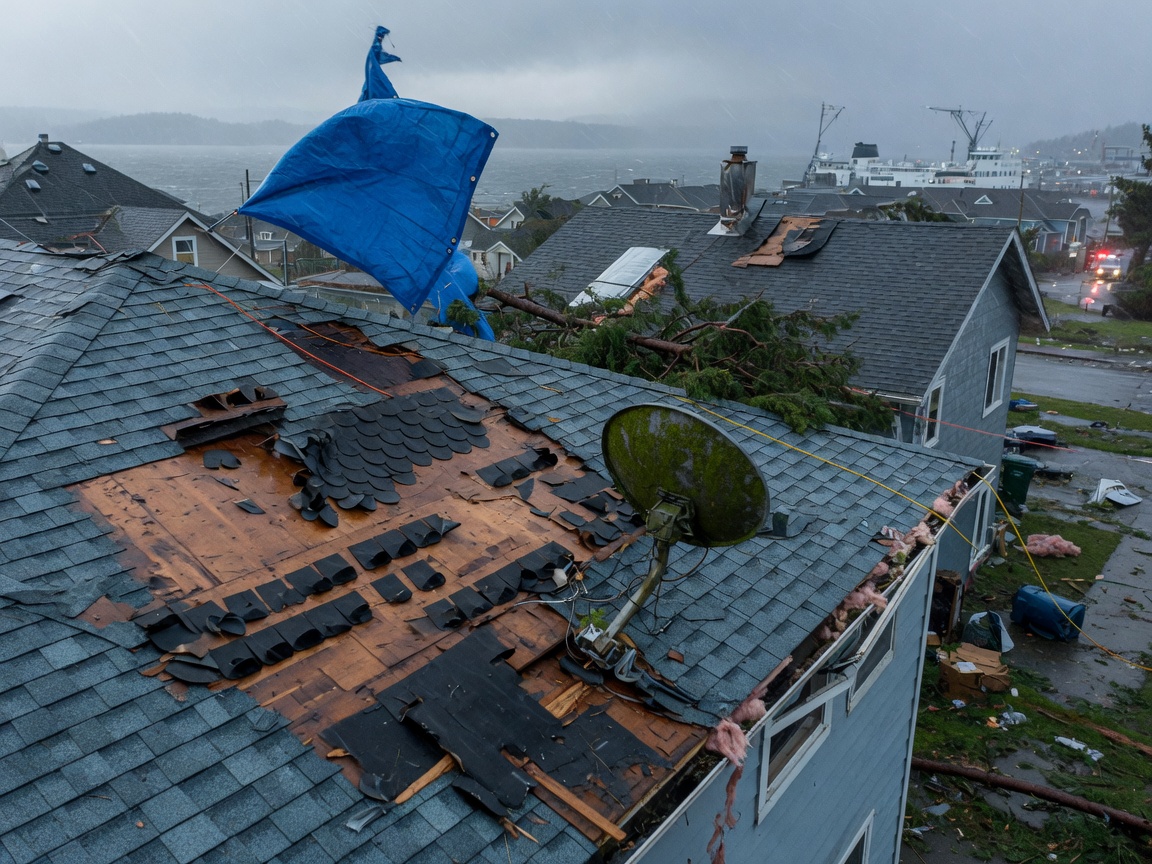
Windstorms in Everett commonly lift or crack asphalt shingles, pull away ridge caps, and loosen step flashing around chimneys on roofs older than 25 years. These failures appear first in exposed neighborhoods such as Lowell and Port Gardner where homes sit on higher ground with fewer windbreaks. Once shingles shift, water enters during the cool wet winters that follow each storm, turning small wind damage into active leaks within weeks.
How Wind Loads Affect Different Roof Types
Asphalt shingle roofs lose granules and tabs when gusts exceed 40 mph because the sealant strip weakens after 8–12 years of UV exposure. Wood shake roofs in Silver Lake split along the grain when wind-driven debris strikes them. Metal panel roofs near the Everett Marina can loosen at screw lines if the original fasteners were not installed with neoprene washers, allowing panels to flap and bend. Flat sections on homes in Downtown Everett often see membrane edges peel back when wind gets under loose gravel ballast. Each material fails at different wind speeds, which is why inspectors check the entire roof slope rather than isolated spots after a storm.
Neighborhood Patterns in Snohomish County
Homes in Lowell and Port Gardner built between 1950 and 1975 often have single-layer roofs with minimal ridge ventilation, making them more likely to experience uplift at the eaves. Silver Lake properties on sloped lots face stronger crosswinds that funnel between houses and hit the south-facing slopes hardest. Newer subdivisions near Mukilteo and Marysville use impact-rated shingles, yet still lose ridge vent covers when winds exceed 55 mph. The Boeing Everett Factory area experiences localized turbulence from large buildings, which can create sudden pressure changes that pop attic vents on nearby roofs. These micro-climate differences mean the same windstorm produces different damage depending on exact location within Everett.
Immediate Steps After a Windstorm Passes
Walk the property only after winds drop below 25 mph and look for loose shingles or debris caught in gutters. Check attic insulation for wet spots near the ridge and along plumbing vents. Photograph any lifted flashing or missing ridge caps before calling a contractor. If active dripping appears inside, place tarps over the affected slope until repairs can be scheduled. Residents in nearby Snohomish and Lake Stevens often wait two to three weeks for full inspections because demand spikes after regional wind events.
When to Schedule a Professional Inspection
Schedule a roof inspection within 10 days of any windstorm that produces sustained gusts over 35 mph. Focus on the windward edges, valleys, and penetrations where step flashing meets the shingles. A thorough check also includes the condition of existing underlayment once a few shingles are lifted for examination. Linking wind damage to later leaks is easier when documented early, especially before the next series of cool wet storms arrives. Homeowners who track these details can prioritize repairs on the sections most likely to fail in the following season.