2026-10-09 ·
Why Does My Roof Leak When It Rains Hard?
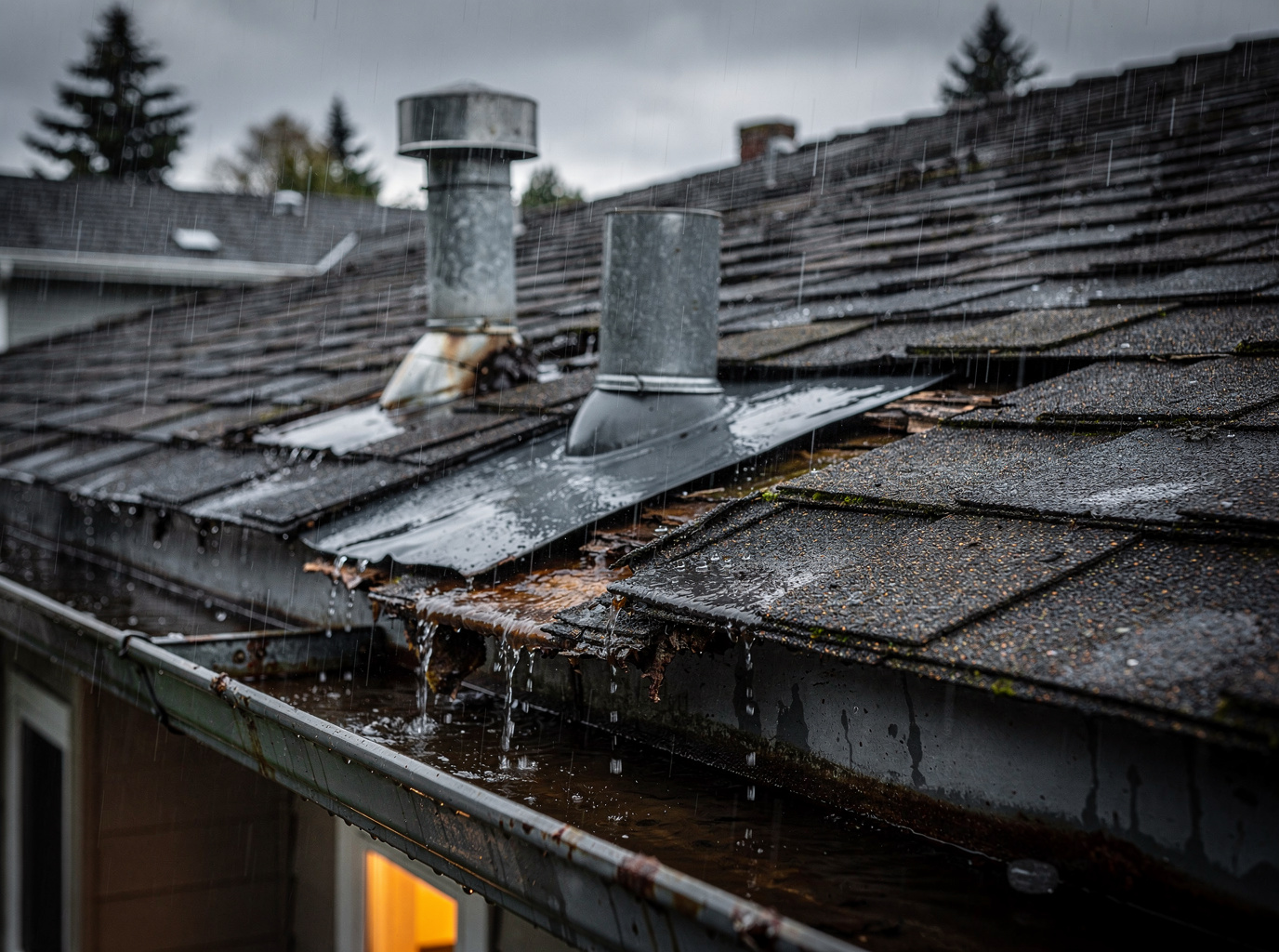
Roof leaks during hard rain usually trace to failed flashing around vents and chimneys, clogged gutters that overflow, or shingles that have lost their seal after years of exposure to Everett's wet winters. These failures let water bypass the roof surface exactly when volume spikes.
Flashing Failures Around Penetrations
Flashing at chimneys, skylights and pipe boots cracks or pulls away over time, especially on homes built before 1990 in Lowell and Downtown Everett. Once the seal breaks, water from a heavy downpour runs straight under the shingles and into the attic. Wind-driven rain common near the Everett Marina and Boeing Everett Factory pushes water farther under lifted edges. Homeowners often notice stains on ceilings after just one intense storm because the gap allows rapid entry. Checking these spots during dry periods helps catch deterioration before the next wet season arrives.
Overflow From Clogged Gutters and Downspouts
Everett's mild dry summers let moss and debris build up in gutters, then cool wet winters send large volumes of water that the blocked system cannot handle. Water backs up under the roof edge at the fascia and soaks into the sheathing. Properties near Forest Park or Silver Lake see this often because tree cover drops extra leaves into the troughs. When downspouts also clog, overflow soaks siding and foundation areas. Clearing gutters before winter storms reduces the chance of this type of leak, but many homes need professional inspection to confirm the slope and hanger integrity still direct water properly.
Shingle and Underlayment Wear in Local Conditions
Asphalt shingles in Snohomish County typically last 15-20 years before granule loss and cracking allow water through during sustained rain. Moss growth accelerates this process by holding moisture against the surface, a common sight on roofs in Port Gardner and nearby Marysville or Mukilteo. Once underlayment deteriorates, even moderate storms can force water through nail holes and seams. Older homes in these neighborhoods often have single-layer roofs that reach failure faster when heavy rain arrives. Regular checks for curling edges and missing granules reveal problems before leaks appear inside the house.
Practical Next Steps When Leaks Show Up
Start by noting the exact location of interior stains and compare them to roof features above during daylight. Avoid climbing in wet conditions. For homes in Silver Lake or surrounding areas, schedule a targeted inspection that focuses on flashing and drainage rather than a full replacement quote. If water is entering now, temporary measures can limit damage until permanent repairs are made. Readers facing active leaks can review what to do when your roof is leaking right now for immediate safety steps. Those suspecting moss-related issues may also find useful detail in moss on your roof is causing leaks. A professional assessment using moisture meters and attic inspection often pinpoints the entry point faster than visual checks from the ground.