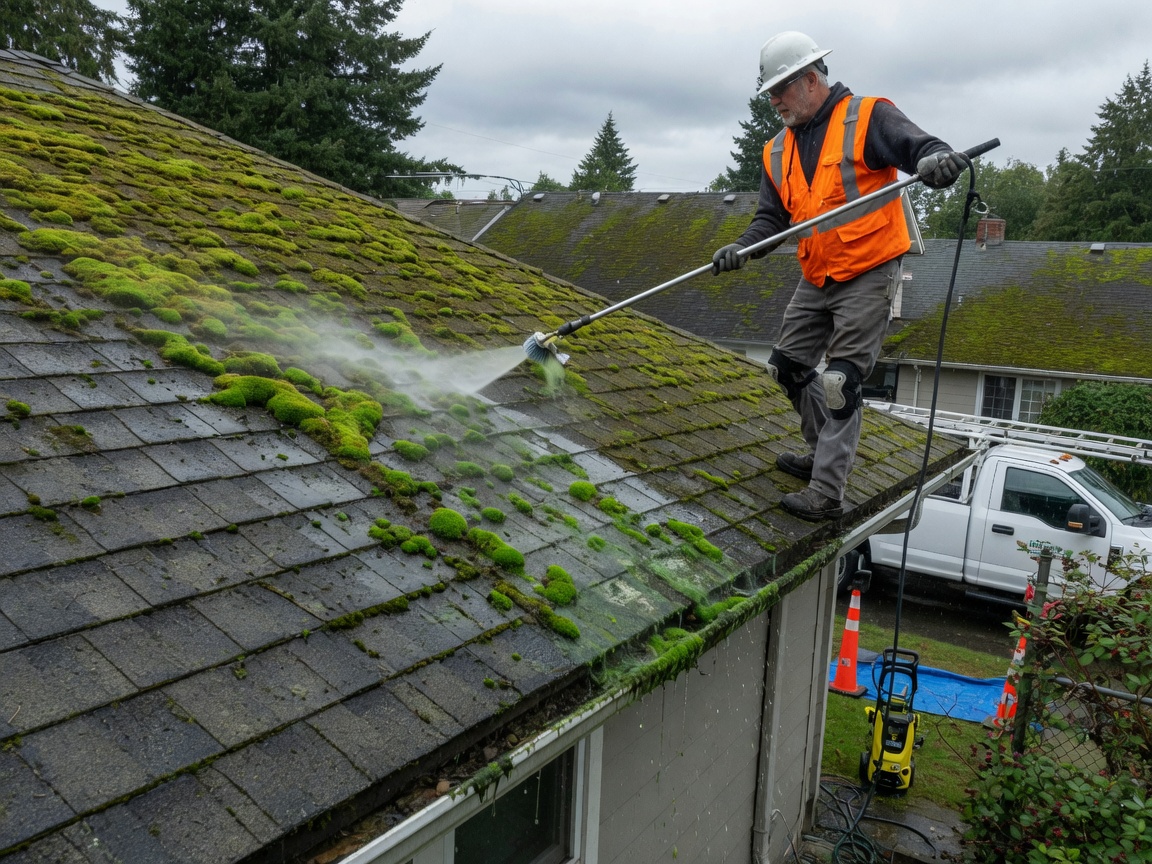
Everett’s cool wet winters keep asphalt shingles damp for months, letting moss take hold on older homes in Lowell and Silver Lake while algae streaks appear on south-facing slopes near the Boeing Everett Factory. Homeowners in Port Gardner and Downtown Everett often see black streaks that trap moisture and shorten shingle life if left untreated. Proper removal starts with a low-pressure soft wash using biodegradable surfactants that kill growth at the root without blasting granules off the surface. Crews then apply a zinc-based inhibitor that slows regrowth through the next rainy season.
Homes built before the 1990s in Mukilteo and Snohomish often have single-layer shingles that can tear if workers walk on wet moss. Technicians work from ladders or lifts on steeper pitches common near Forest Park, avoiding foot traffic on fragile areas. After treatment, gutters along 19th Ave SE addresses are flushed to prevent clogged downspouts that back water under the eaves during heavy winter rain.
Moss grows fastest on north slopes shaded by tall firs common throughout Snohomish County, so crews inspect those sections first and treat them more heavily. Metal flashings around chimneys and skylights receive extra care because harsh chemicals can corrode them. Homeowners receive a written note on which slopes need re-treatment first if winter rains return early.
Technician insight
In Everett the thing that catches most people out with Roof Moss & Algae Removal is how quickly moss returns on north slopes shaded by firs in Silver Lake and Lowell; the wet winters keep those sections damp long after the rest of the roof dries, so skipping the zinc treatment almost guarantees a repeat job within two seasons.
Heavy moss on north slope in Lowell
Homeowner noticed standing water near the eaves after fall rains. Inspection showed thick moss on the shaded north slope trapping debris. Crew applied soft wash, cleared the gutters, and treated with zinc inhibitor. Water now sheds cleanly and no new growth appeared the following spring.
Roof Moss & Algae Removal Services We Offer
✓Asphalt Shingle Moss Removal
Low-pressure soft wash and root-kill treatment that clears thick moss mats from older single-layer shingles without dislodging granules.
✓Algae Stain Treatment
Targeted surfactant application that removes black algae streaks on south-facing slopes common in Silver Lake and Port Gardner.
✓Preventive Zinc Inhibitor Application
Post-cleaning treatment that leaves a slow-release zinc coating to reduce new moss growth through Everett’s wet winters.
✓Gutter Clearing After Moss Removal
Full gutter and downspout flush to remove debris loosened during roof cleaning and prevent winter backups.
✓Shaded Slope Moss Control
Extra-strength treatment for north-facing sections shaded by trees near Forest Park and Lowell where moss returns fastest.
Roof Moss & Algae Removal Cost in Everett, WA
| Service | Typical Range | What Affects It |
|---|---|---|
| Single-story moss removal | $450–$750 | Size, slope access, and amount of growth |
| Two-story moss removal | $650–$950 | Ladder or lift time required |
| Zinc inhibitor add-on | $150–$250 | Applied same day after cleaning |
| Gutter clearing with service | $100–$200 | Included when roof work is performed |
Ranges are typical for Everett, WA and confirmed with an exact written quote before any work starts.
How it works
- 1
On-Site Assessment
Technician walks the roof from the ground and safe access points to note moss thickness, shingle condition, and shaded areas typical in Snohomish County neighborhoods.
- 2
Soft Wash Application
Biodegradable solution is applied from ladders or lifts to kill moss and algae without high pressure that can damage older Everett asphalt shingles.
- 3
Rinse and Debris Removal
Roof is rinsed and gutters are cleared so loosened material does not clog downspouts during the next winter storm.
- 4
Inhibitor Treatment
Zinc-based product is applied to slow regrowth on treated slopes before the crew leaves the 98208 address.
Pricing
Most single-story Everett homes need one visit; two-story homes or heavy growth near trees add time and equipment.